Pages

Weed Identification and Control

Weeds are one of the most common and frustrating lawn care problems. This website has tips and advice on preventing and controlling weeds as well as countless images to help identify the weeds causing you problems.

Lawn and Turf Aeration

Aerating the lawn is one of the most beneficial tasks for the lawn. It helps create a healthy growing environment in the soil and eliminates many lawn care problems. We have information on the different types of aeration and the benefits of each.

Thatch

Thatch is the accumulation of organic matter between the grass plant and the soil. Although a small amount is acceptable and is beneficial to the lawn, too much can cause major problems.

Creating a Problem Free Lawn

Most gardeners desire a thick green carpet of grass, free of weeds, moss and other common lawn problems. This is easier to achieve than most people think.

Feeding the Lawn

All lawns require feeding at various points throughout the year to help maintain good turf vigour. We have tips and advice on what fertiliser to apply for the optimum results.

Tuesday, 5 June 2012

Birds-foot Trefoil

Lotus corniculatus
birds-foot trefoil
General - Birds-foot Trefoil is a long lived hardy perennial weed.

It gets its name from the seed pods produced after flowing, these seed pods resemble a birds foot.

It can often be found on river banks and ditches where it is free draining.

It is a leafy legume plant that can either grow prostate or erect and can reach a height of 40cm.

Leaves - Birds-foot Trefoil leaves are a blue - green colour. They consist of 5 leaflets, with the central 3 on a short stalk and the remaining 2 on the base of the stalk.

Flowers - The bright yellow flowers sometimes seen with orange or red streaks, flower between May and September.

Roots - Birds-foot Trefoil is a deep rooting weed with a branched root system which spread via stolons and rhizomes.

Habitat - It can adapt to most conditions but is particularly at home on dry, free draining soils. This weed can be an indicator of low fertility on lawns.

Cultural Control - Hand weeding may prove difficult for all but a few plants again it is important to completely remove the roots. Regular slashing or raking can help weaken and discourage Birds-foot Trefoil.

During the summer months maintain turf health with adequate nutrition and don't allow the soil to become too dry during periods of drought.

Monday, 4 June 2012

Selfheal

Prunella vulgaris

General - Selfheal is a perennial lawn weed that is a member of the mint family. This weed can adapt to most conditions, in neglected areas it can grow up to 300mm tall , or can form as a low growing mat on mown turf.

Once established Selfheal spreads quickly via underground runners known as rhizomes and by seed.

Leaves - The oblong leaves are bourn in pairs and can be slightly hairy. The leaves are dark green and the edge are often slightly scalloped.

Flower - Selfheal has distinct clusters purple flower bourn on square stems. This weed flowers between June and September.

Habitat - Selfheal thrives in all types of soil types and conditions.

Cultural Control - Ideally tackle this weed early by removing individual plants by hand before it has had time to develop into larger clumps.

If large clumps have already formed they can be dug out by hand too. Regular mowing helps prevent seed head formation. Keeping the lawn in a healthy condition will help discourage weeds.

Chemical Control - Selfheal is a difficult weed to eradicate using chemicals as it is resistant to many selective weed killers. If you go down this route there are a few options with selective weed killers.

You could use a weed killer that contains a 2,4-D mixture (mecoprop-p or dicamba). Another option is a weed killer that contains a mixture of clopyralid and fluroxypyr.

Repeat applications may be necessary to effectively control this weed. Always follow the manufactures recommendation when using chemicals.

Lesser Trefoil - Yellow Suckling Clover


Trifolium dubium

Lesser Trefoil - Yellow Suckling Clover
General - Lesser Trefoil is an annual weed, and is sometimes known as Yellow Suckling Clover. It is a common weed on garden lawns and will tolerate close mowing.

As with other types of clover it increases nitrogen fixation ( improves soil fertility). If the weed is neglected it will spread rapidly, choking the grass. Lesser Trefoil can be a difficult weed to control.

Leaves - Each leaf has 3 leaflets (trifoliate) bourn on short stalks. The leaves are generally smaller than White and Red Clover.

Flowers - The small yellow flowers which will later turn brown are self pollinating and can be seen between May and October.

Habitat - Lesser Trefoil can adapt to most soil types but prefers light free draining soils.

Cultural Control - If the infestation is not too severe removing clumps of Lesser Trefoil by hand can prove successful taking care to remove the whole plant. Encourage a healthy sward that will suppress weeds with adequate nutrition.

Box of the clipping when mowing the lawn. Avoid letting the lawn dry too much out during periods of drought.

Chemical Control - Selective weed killers can be used to control Lesser Trefoil. For the best results apply when weeds are actively growing usually between April and October.

Choose a product that contains mecoprop-p or fluroxypyr. If the weeds are confined to section of the lawn, spot treatment would suffice.

Chemical weed killers should always be used with care, and as a last resort in the battle against lawn & turf weeds.

Lesser Trefoil - Yellow Suckling Clover

Lesser Trefoil - Yellow Suckling Clover

Lesser Trefoil - Yellow Suckling Clover (Flower)

Lesser Trefoil - Yellow Suckling Clover

White Clover

Trifolium repens
General - White Clover (Trifolium repens) is a rapidly growing perennial weed that spreads via stolons.

White Clover is a very common weed in lawns and it easily tolerates close mowing and is at home in a variety of soil conditions.

Leaves - The leaves of White Clover are one of the most recognisable of all lawn weeds. Each leaflets consists of 3 leaflets (trifoliate), with each leaflet having a white band near the base.

Flowers - The flowers are white to pink in colour and are formed in compact rounded clusters. The flowers on White Clover can be seen from May to October.

Roots - White Clover has a fibrous root system, it is a shallow rooting weed which can suffer badly in droughty conditions.

Habitat - White Clover can thrive quite happily in most soil conditions, especially moist soils, that are nutrient deficient (low fertility).

Cultural Control - White clover may be removed by hand where practical, taking care to remove the whole root system. Once it has become widespread hand removal will prove difficult.

Pay attention to good lawn care practices that encourage a healthy sward which will help suppress weeds. Maintain good soil fertility by applying the correct amount of fertiliser throughout the growing season.

Chemical Control - Chemicals should only be used as a last resort and when all other avenues have been exhausted.

If the problem is only localised, consider spot spraying, don't treat the whole lawn for a small area of weeds. (N. B. Spot treatment should not be carried out if the product being used is a weed and feed product, the whole lawn will have to be treated).

When spraying White Clover choose a selective weed killer that contains mecoprop-p or fluroxypyr for the best results. A repeat application will most likely be necessary about 6 weeks later to successfully control the weed.

Sunday, 3 June 2012

Daisy

Bellis perennis

General - The Daisy is a very common lawn weed, easily recognised by its distinct yellow and white flower.

This perennial weed which spreads via rhizomes and seed is at home on all types of lawn and its low growing rosette form allows it to tolerate close mowing.

Leaves - The leaves which form a flat rosette are spoon (oval) shaped and the edges can be scalloped.


Flowers - The Daisy has a very recognisable flower, white petals (although in some cases the petals can be a pinky red colour) with yellow centers.

The flowers are bourn on long stalks and can be seen from March to November.


Roots - Daisies have a strong tap root with rhizomes which allow it to adapt to all types of conditions.


Habitat - Daisies can thrive in all types of conditions especially moist, nutrient deficient soils.


Cultural Control - Hand weed ensuring that all of the root is removed. Maintain the lawn with good lawn care practices that encourage a healthy sward which in turn will discourage weeds.


Chemical Control - Chemical control should only be used as a last resort to control weeds. If possible spot treat the lawn if the weeds are localised, only treat the whole lawn if it is suffering from weeds.

Lawn weed identification

selfheal It is important too that the weeds in your lawn have been identified correctly when taking action against them.

This is especially true prior to weed control using chemicals in the form of selective weed killers.

Although modern weed killers or herbicides are formulated to control a wide spectrum of weeds, there may be certain weeds that are resistant to various products.

If the wrong product is applied, it will prove ineffective against the weeds in the lawn, and will be a waste of time and money.

Therefore is is always best to correctly identify turf weeds, so you can choose the product that will give the optimum results and remove those causing you problems.

Using the chart below you can click on the relevant picture, this will take you to another page with information and images of  your chosen weed.

daisy

white clover
lesser trefoil - yellow suckling clover
birds-foot trefoil
slender speedwell

germander speedwell
selfheal
lesser celandine
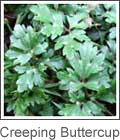
creeping buttercup
creeping cinquefoil
silverweed
yarrow
procumbent pearlwort
parsley piert

common chickweed
dandelion
cats ear


bristly-ox tongue
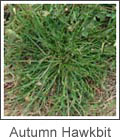
autumn hawkbit
smooth hawksbeard
black medic
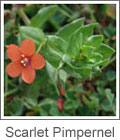
scarlet pimpernal

greater plantain
ribwort plantain

starweed - buckshorn plantain


Saturday, 2 June 2012

Weeds in the lawn

lawn weeds

Definition of a lawn weed

A weed is a plant growing where it is not wanted.

Why do we get weeds 

During the spring and summer months, lawn weeds are one of the most common problems on the garden lawn.

Lawn weeds are more of a problem on new lawns and low maintenance lawns than on well maintained luxury lawns which contain better quality turf, better equipped to suppress any weed invasion.

Weeds are opportunistic and look for any weak or thin areas in lawns and turf. When these conditions occur this presents weeds with the perfect opportunity to invade and spread. Weeds seeds are present in the soil or can be carried in the wind or by birds.

Preventing weeds

Like many lawn care problems prevention is better than the cure. As we previously mentioned high quality lawns are better able to withstand weed problems than low maintenance lawns.

This is the because the grass it thicker with no bare areas for weeds to invade. Lawn weeds are opportunistic and look for weak areas in the lawn.
Some lawn weeds also thrive in certain conditions e.g Plantains favour compacted soils, Buttercups prefer wets soils.

Therefore, by correcting the underlying cause of the conditions that cause the weeds will help eradicate the weed in question.

The most effective way to prevent weeds in the lawn is the keep the lawn in a healthy conditions using good lawn care management practices.

A lawn that is thick and healthy gives weeds very little opportunity to invade and become a problem, those that do invade can easily be removed by hand or spot treated. Lawn care practices such as fertilising, aeration, scarification etc all add up to a healthy lawn that will be able to suppress lawn weeds.

Methods of controlling weeds

Once weeds have established and become widespread they will need removing. The two options of removing lawn weeds are by cultural methods or by chemical means using a selective weed killer.

Cultural weed removal - Quite simply this is removing the lawn weed by hand with a daisy grubber or small knife (be sure to wear protective gloves if necessary).

Certain lawn weeds like daises, plantains and can easily be removed by hand (be sure to remove all of the root), however other because of their growth habits are more difficult.

Chemical weed removal - At time the infestation may be very severe and chemicals have to be used in the form of selective herbicide's. If the weeds are few consider spot treating them. Chemicals should only be used as a last resort.

When to treat weeds

Selective weed killers should be applied between April and September, when the weeds are actively growing in the lawn. Many selective weed killers are now incorporated into a spring and summer feed & weed mixture.

These are ideal as the fertiliser in the mixture encourages grass growth for a better kill.
When using chemical wed killers it is important to follow the manufactures application and healthy & safety guidelines and recommendations.

Friday, 1 June 2012

Moss in the lawn

Moss in the lawn
Moss, for many gardeners is the most annoying of all the problems associated with lawns. Moss is most commonly a problem on the lawn during spring time.

This is especially true especially if the winter weather has been poor and grass has become thin and weak and moss has been allowed to flourish.

Mosses are primitive non flowering plants that have no root structure, they rely on moisture being available in the environment to spread. Although there are over 10,000 types of moss they fall into 3 different groups.
  • Cushion moss - these are associated with lawns that are closely mown and where scalping of the turf has occurred.
  • Trailing moss - this type of moss is usually found on lawns with poor drainage or suffer with shade.
  • Upright moss - this type of moss is associated with drier soils often with a low soil pH (acidic).

Why do I have moss in my lawn

Like many lawn care problems the conditions in the lawn have to be favourable for the moss to encroach. Moss can invade a lawn when any of the following conditions are present.

  • Excessive periods of wet of dry weather
  • Soils that are deficient in nutrients (low fertility)
  • Compacted soils
  • Very low soil pH
  • Lawns that suffer from excessive shade
  • Poorly drained soils
  • Lack of air circulation
  • Turf that has been weakened by close mowing
  • Poor lawn and turf maintenance

How to prevent moss in a lawn

As with most lawn and turf problems, prevention of the problem is better than the cure. Moss will only be a problem if any of the above symptoms are present.

It may be impractical to remedy all of the conditions that causes moss, in fact some maybe beyond our control, so concentrate on correcting the causes that apply to your situation.

  • Maintain a balanced fertiliser program that keeps the sward thick and healthy giving moss little opportunity to invade.
  • Aerate the lawn to relieve the soil compaction.
  • Remove thatch if it has become excessive. Thatch is usually one of two extremes, very wet or very dry, both favour moss development.
  • Improve the airflow over the surface of the lawn, this will help keep the surface of the lawn dry, helping prevent moss.
  • Reduce the shade by selective pruning of trees, grass growth suffers badly in areas of poor light, which in turn gives moss the ideal opportunity to out compete the grass. This is why moss is always a problem during the winter.
  • Avoid over watering the lawn.
  • Avoid mowing the lawn to closely especially late in the growing season.

How to control moss in a lawn

Once moss has invaded and the quality of the lawn has deteriorated somewhat, some form of action will be needed to remove the moss from the lawn.

The most common product used to control moss is sulphate of iron. This ingredient can be found many products such as lawn sand, feed weed & moss killer products and many more available in both granular and liquid formulations.

These products are usually applied during the spring time when moss is most problematic and as the grass is showing signs of growth to promote quick recovery.

Once the moss has been killed (usually after 2 weeks) it can be removed from the lawn using a spring tine rake of a garden scarifier. Once the moss has been removed from the lawn you can then proceed with the rest of your spring renovation program.

This can include aerating, overseeding, top dressing and feeding the lawn.
However it is important to note that if the conditions causing moss are not corrected it will continue to be a problem.